


Share Article:


Nonprofits build long-term donor loyalty by using post-event data to send personalized thank-you messages and share real-world impact. Most organizations focus all their energy on the big fundraising event, but the most important work actually happens after the guests go home. Treat your event as a starting line rather than a finish line, and you’ll turn a moment of high energy into a permanent partnership.
Successfully moving from a one-time donation to a deep relationship requires a clear donor follow-up plan after a fundraising event. It’s about listening to what your donors told you through their actions and responding in a way that feels personal. It’s important to understand how to use those insights to keep your mission top-of-mind and your supporters coming back.
1. Turn event data into donor insights
Gathering data during and after an event allows you to understand what motivates your donors and improve your follow-up strategies. While standard donor profiles track long-term history, event-based data captures a moment of inspiration. Showing supporters that you noticed their specific interests during a fundraising event keeps them emotionally connected to your mission.
Capture event-specific data points
To gain deeper insights, look for real-time behaviors that reveal a donor’s heart. An event shows you what a person cares about right now. Look beyond the gift size and gather information such as:
- Event-specific motivations: Use registration questions to ask why they chose to attend this particular event. Was it a specific speaker or a program they love?
- Bidding behavior: Which auction items did they chase? This reveals personal hobbies or specific projects they want to fund.
- Session attendance: Which breakout rooms did they join? This shows exactly which part of your mission moves them the most.
- Table dynamics: Who did they sit with? This helps you see how your supporters are connected to each other.
Build a foundational donor profile
Successful follow-up after fundraising events combines real-time attendee behavior with established donor data to create a complete constituent profile. When you understand the whole person, your outreach feels like a conversation between friends.
For some nonprofit fundraising events, you’ll learn about your attendees during the planning process. For example, many details are naturally gathered when you are planning a fundraising gala and live charity auction specifically for your highest-impact donors and prospects. Ensure your records include these key details:
- Engagement histories with your organization
- Direct feedback from surveys to learn what parts of your mission they find most moving
- Wealth markers identified through prospect research
- Personal preferences, for example, preferred programs or communication channels, such as text vs email
Measure engagement to inform strategy
Nonprofits must define their engagement metrics before an event begins to ensure they are collecting the data points that best reflect donor interest. Methods for measuring this will vary, but common examples include tracking digital clicks or the average number of bids per guest.
Think about these metrics ahead of your next event to decide which ones best show how your guests interact with your events. Use software to track these metrics in real-time to ensure you’re collecting the right data as it happens. This allows you to build relationships in targeted ways rather than sending the same generic thank you to everyone.
Review performance metrics immediately
Review your data while the event is still fresh to identify your most promising leads. Ask yourself:
- Did we acquire new supporters through the event?
- Which specific table or group brought the most energy or invited the most new event guests?
- Who was the most engaged (high bidding or clicking) versus who just observed?
Proactive tip: Reach out to those who registered but didn’t show up. Seek feedback from them to show you value their interest in the mission, not just their event attendance and money.
Organize data for personalized outreach
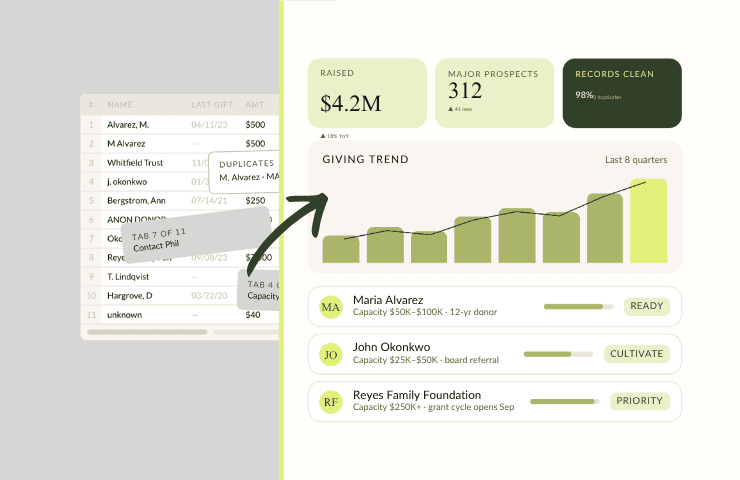
Manual data entry and messy spreadsheets create bottlenecks that prevent your team from acting on new donor insights. To avoid losing the momentum of a successful event, you must keep your data organized and up-to-date with a centralized fundraising CRM.
Once your data is structured, use donor segmentation to group your attendees by their event behavior and interests, rather than just their gift size. This allows you to send outreach that feels deeply personal without the impossible task of writing a unique message for every single supporter.
2. Create a plan for reaching out to donors
Nonprofits will maximize donor retention by contacting event attendees within 48 hours after an event ends. Research from McConkey Johnston International shows that first-time donors are four times more likely to give again if they get a personal thank-you within two days.
This “golden window” is the best time to reach out because the excitement of the event is still fresh. Having a fast donor follow-up strategy after a charity event shows donors that their presence truly mattered to you.
Send a “golden window” thank-you message
A great follow-up message should make the donor feel like an insider who helped make the win possible. Instead of just sending a receipt, share the joy of the event. Your first message should include:
- A sincere thank you: Focus on the donor’s role as the hero of the story.
- A “behind-the-curtain” look: Share a photo or a 30-second video of the team celebrating the success.
- The total amount raised: Tell them the final fundraising results right away so they feel part of the victory.
- A “day 1” goal: Explain exactly how their money will be used within the next 30 days.
- A favorite moment: Mention a specific part of the event, like a great speech, to remind them of the fun they had.
Use an impact landing page to show results
An impact landing page allows guests to relive the event and see the direct results of their donations. Keep that event energy alive by sharing:
- Best moments: Post photos or short video clips of the most moving moments of the event.
- Real results: Show the final amount raised and which projects that money will start.
- Ways to help: Give donors a clear way to stay involved, like signing up to volunteer or subscribing to a newsletter.
Match your outreach to donor interests
Effective donor stewardship means using the interests you discovered at the event to decide what the donor sees next. Rather than sending everyone the same email, point them toward the specific part of your mission they enjoyed most at your event.
This approach allows your team to move supporters through a healthy donor engagement cycle that guides them toward new ways to help your mission. In practice, this means organizing supporters based on how much they’re able to give (capacity) and their love for your cause (affinity).
Example: Personalized follow-up after a hybrid event
When planning a hybrid gala, use the event’s dual structure to create tailored paths toward personal relationships. By inviting major donors to attend in person while hosting other supporters virtually, you create natural groups for your follow-up. This allows you to meet donors where they are and move them closer to your mission based on their specific experience.
For example, once your hybrid event finishes, your outreach should follow distinct paths:
- For in-person major donors: Call them within 48 hours while the excitement is still high. Invite them to a private coffee meeting to discuss the night’s success and ask for their personal feedback on the event.
- For high-capacity virtual guests: Send a personalized video message recorded by your leadership. Thank them for joining from home and offer a virtual tour of your mission in action to bridge the physical gap.
- For mid-level supporters: Send an impact email that focuses on the specific program they engaged with online. Use data from their digital clicks or breakout room attendance to make the story relevant to their passions.
Use software to automate your work
Fundraising software helps your team sort donors into different groups and send the right message at the right time without having to do everything by hand. Automated reports show you who is opening your emails and clicking your links, so you can see what is working.
By using these tools to manage your follow-up communications, you create a cycle where you use data to constantly improve how you connect with your supporters. If engagement is low, change your plan and experiment to find the most effective ways to continue the relationship.
3. Offer a diverse range of engagement options
Providing a variety of ways to interface with your mission ensures your follow-up appeals to different donor personalities and interests. You want to keep your mission on supporters’ minds without overwhelming them.
Filling your calendar with virtual and hybrid events makes it easy to boost your philanthropic audience’s engagement with opportunities that don’t require you to spend too much extra time or money.
Expand your event calendar with virtual options
Planning for virtual fundraising looks different for every organization and allows you to reach donors where they are. Moving beyond one big annual gala helps maintain interest throughout the year. Common examples of these flexible options include:
- Virtual or hybrid auctions: Keep the bidding excitement alive from any location.
- Online peer-to-peer fundraising campaigns: Let your supporters raise money on your behalf.
- Virtual informational panels: Share expert insights about your mission in a simple webinar format.
- Social media awareness campaigns: Use digital storytelling to reach new audiences.
Use a stewardship matrix to manage touchpoints
A stewardship matrix is a simple chart that helps your team plan how and when to contact different groups of donors. This tool ensures you use a diverse mix of touchpoints, such as direct mail (letters, cards, and handwritten notes), email, social media, and phone calls, without causing donor fatigue. It helps you balance your outreach so supporters feel valued and informed, but never pestered.
Provide active and passive ways to help
Offering both leadership roles and simple giving options allows every supporter to find a comfortable way to stay involved. These approaches encourage donor-led advocacy:
- For active supporters: Invite them to become ambassadors who lead online peer-to-peer fundraising campaigns or future events. This gives them a sense of ownership over your success.
- For passive supporters: Highlight monthly giving and membership options. Focus on the perks of these programs that provide value in exchange for steady support.
Tip: Always include social sharing buttons within your donation confirmation page or email so supporters can easily share their involvement and upcoming events with their friends.
Use specialized tools to track the donor journey
Dedicated fundraising software allows you to collect specific engagement data you need to continue refining your follow-up:
- Virtual or hybrid auctions: Use a virtual auction platform to track which items people bid on.
- Peer-to-peer tool: Identify which ambassadors are bringing in the most new leads.
- Engagement analytics: Review who attends events or informational panels to see which mission topics are trending.
Maximize your event’s long-term impact
Nonprofits build long-term donor loyalty by using post-event data to send personalized thank-you messages that show they value each donor’s specific passions. Moving quickly during the golden window allows you to speak directly to what a donor cares about and builds the trust needed to keep them involved. This heartfelt approach transforms a one-time gift into a lasting emotional commitment to your mission.
Offering a variety of engagement options ensures every supporter finds a comfortable way to join your community long after the event ends. Whether they choose to be active ambassadors or steady monthly givers, these choices help your organization grow alongside its donors. By targeting specific groups and following up in heartfelt ways, your events do two jobs: they raise money today and build deeper relationships for tomorrow.

Be the first to read our resources.
The world is changing quickly—and our resources help you stay on top of it all. Sign up to get new insights, success stories, and more, sent right to your inbox.
Explore related resources.
-
How to turn your fundraising cycle into an upward spiral

Post How to turn your fundraising cycle into an upward spiral
Discover the six stages of the fundraising cycle and how nonprofit fundraisers can turn routine cycles into an upward spiral of donor growth.
-
The essentials of donor databases for nonprofits
Post The essentials of donor databases for nonprofits
Discover key CRM features, explore top software options, and find the right solution to boost your fundraising.
-
How to build actionable donor lists for nonprofits

Post How to build actionable donor lists for nonprofits
Donor lists for nonprofits are the secret to smarter fundraising. Learn how to build, segment, and score your donor data to maximize your impact.