


Share Article:


Grants are often a major source of funding for nonprofit organizations, and unrestricted grants offer flexibility and autonomy for charitable organizations that restricted grants or other nonprofit fundraising strategies often can’t replicate.
In the article below, we’ll outline how unrestricted grants work, the benefits they bring for nonprofits, where to find unrestricted grant opportunities, and the steps to a successful application.
What are unrestricted grants for nonprofits?
An unrestricted grant is funding given to a nonprofit without rules or restrictions to determine how the funding is spent. Unrestricted grants can be used in any way the nonprofit chooses—including funding operational costs, salaries, or other general expenses.
Unrestricted grants can be awarded by corporate foundations, trust-based philanthropy, private and public foundations, or more local or specialized funders. While the financial support doesn’t come with specific rules, funders do have their own rules on who is an eligible nonprofit organization. For example, they may be looking to advance education, prevent housing insecurity, or create more sustainable food systems.
Restricted vs. unrestricted funds
The key difference between restricted and unrestricted funds is that restricted funds are awarded for a specific purpose, like a new program or initiative. They also come with stricter reporting requirements and less flexibility than unrestricted grants.
On the other hand, nonprofits are free to spend unrestricted funds as they see fit to advance their mission.
Benefits of unrestricted grants
In most cases, unrestricted funds bring more flexibility, and mean that the nonprofit leaders themselves determine how funds are used to advance their mission—not an outside funding body.
Unrestricted grants come with several major benefits over restricted grants:
- Greater financial stability: Because unrestricted grants can be used to fund existing operational infrastructure, they offer greater financial stability than a grant designed to fund a specific initiative.
- More flexibility: Nonprofits can use unrestricted funds to address any unexpected costs or emergencies. They’re free to adapt their spending based on their beneficiaries’ needs and how these evolve.
- Fewer reporting requirements: With restricted grants, nonprofits usually commit to itemized reporting, demonstrating how every dollar is spent. While unrestricted grants still typically require fund accounting and impact reporting, it’s usually less detailed and labor-intensive.
- Freedom to innovate: Unrestricted grants empower nonprofit leaders to make their own decisions about how funding should be spent to advance their mission. Given that nonprofit leadership often has the best knowledge of the communities they serve, this can give them the freedom they need to make exciting organizational developments.
The application process: How to apply for unrestricted grants
Each grantmaking body comes with its own grant application form and portal, but the steps below are essential for writing a winning grant application.
While most grant applications are completed through an online portal, it’s good practice to draft out your answers in a Word document beforehand. This way, you can edit, refine, and keep a detailed record of the information you’ve provided to each funding body. Plus, you’ll have all the information you need readily available for future grant writing cycles.
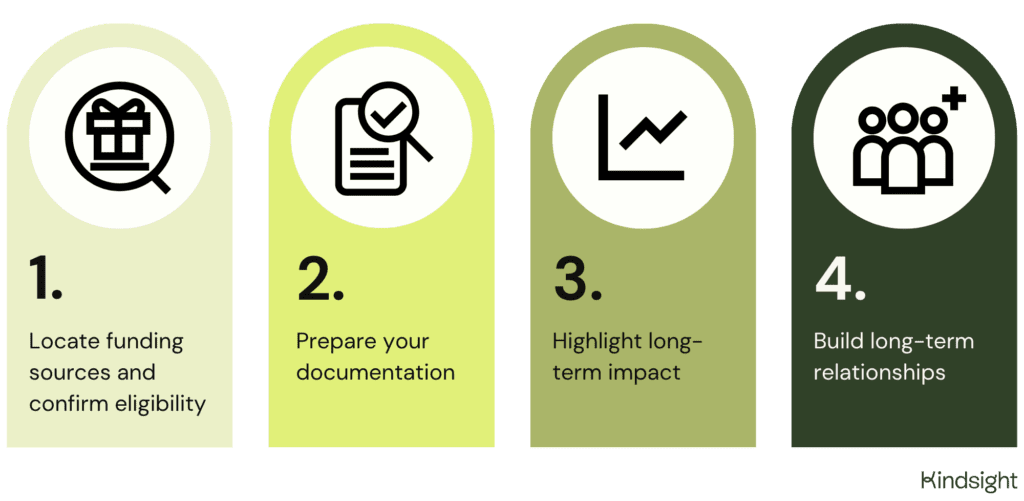
- Locate your funding sources and confirm eligibility
Start by researching the organizations that offer funding opportunities (we’ve listed some foundations to help you get started, along with a step-by-step approach to sourcing unrestricted grant opportunities in the section below).
Before you dive in, ensure you’re an eligible applicant. Some grants only award funds to organizations in a certain location or with very specific missions. Applying for grants takes time, so make sure you conduct thorough research so you can keep your focus on value-aligned organizations.
- Prepare your documentation
Most grantors look for evidence of a financially responsible organization with transparent record-keeping procedures. Provide your most recent financial statements, your annual budget, predicted revenue, or any other evidence of your financial health.
You’ll also need to provide evidence of your tax-exempt status, your mission statement, and an outline of your leadership structure. Consider using an AI grantwriting tool to make your grantwriting process even more efficient.
- Highlight long-term impact
While unrestricted funders won’t dictate how you allocate resources, they will be looking for evidence of long-term, value-aligned impact. Take time to craft a compelling narrative about what your nonprofit has achieved and your future plans, including evidence, data, testimonials, visuals, graphs, and interviews.
Be sure to clearly align your impact narrative with the grantmaker’s core values. For example, if the grantmaker is focused on combating food insecurity, clearly state in your application how each of your programs works to make this a reality.
Ultimately, the goal is to clearly demonstrate your nonprofit’s work and how this work aligns with the grant organization’s own philanthropic goals.
- Build long-term relationships
Often, funders who’ve witnessed a nonprofit’s development first-hand are more likely to invest in its mission. The strategies below help you build positive long-term relationships with grant-making bodies, which can open your organization up to more funding opportunities in the future:
- Offer regular updates: Share information beyond the grant application process, including major wins, developments, and case studies highlighting beneficiary impact.
- Personalize communications: Even though unrestricted funders don’t specify how funds should be spent, it’s still good practice to tailor communications based on the funders’ values and priorities.
- Request feedback: If your grant application is unsuccessful this time, use it as an opportunity to request feedback—this helps you start a two-way conversation with a funding body.
- Leverage social media: Connect with grant-making bodies on LinkedIn and other social media—this way, you can learn more about the types of organizations receiving grants, and share your own updates.
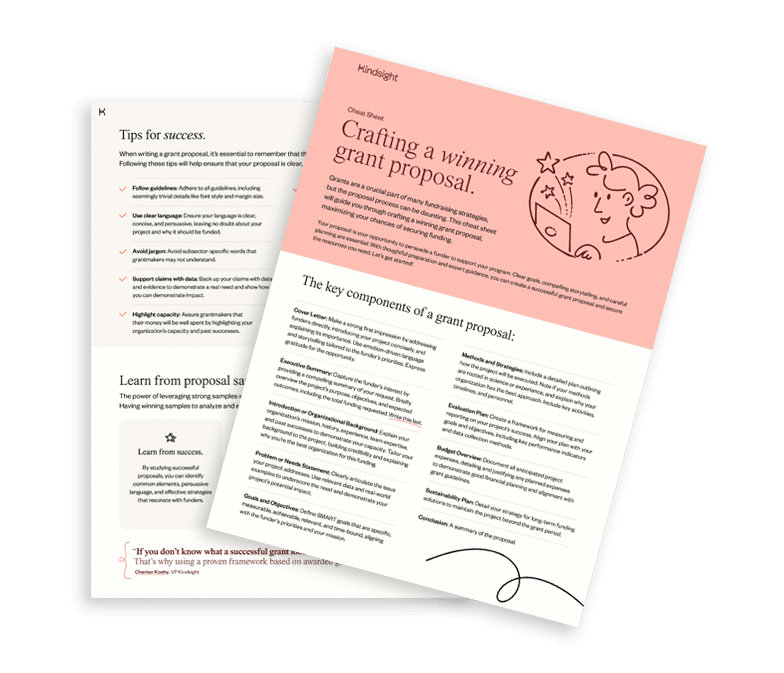
Need a quick reference for how to write a grant application?
Here is a bite-sized guide to the grant writing process, outlining key components and offering practical tips for success.
How to find unrestricted grants
When you’re browsing for unrestricted grants, look for the terms “unrestricted,” “general operating support grants,” or “capacity building.” These terms are usually a good indicator that the funding offered can be used for general nonprofit expenses rather than a restricted, specific project or initiative.
The steps below will help you uncover value-aligned grantmaking bodies offering unrestricted funds to nonprofits like yours.
- Get clear on your mission
Before you start applying for grants, be very clear about your own mission, goals, and values. This is especially important for early-stage organizations. Grantmakers will want to understand your nonprofit’s goals and see evidence that you have a strategic plan to meet them.
Start by returning to your mission statement, evaluating your past initiatives, and reviewing the initiatives and programs you have planned for the future, and how this fits into your wider mission. When you’re clear on your own goals, finding (and selling yourself to) value-aligned grantmakers gets easier and more efficient.
- Use grant databases
Use grant management platforms, databases like Candid, Instrumentl, Grants.gov, and GrantStation to explore grant opportunities. Many of these databases allow filtering by funding types, mission alignment, geographic focus, deadline, and more. You may need to set up an organization profile, so you can quickly narrow down search results to find the most relevant opportunities.
While some grant databases require a paid subscription, other resources, like the Philanthropy News Digest, let nonprofits explore curated grant opportunities for free.
- Review local resources and smaller funders
Explore more localized grant opportunities, like local community foundations. Local community foundations (like the Silicon Valley Community Foundation, if you’re located in California, for example) focus on more regional impact and supporting local nonprofit organizations.
Search for grant databases tailored to your specific region. Private family foundations can provide grant funding based on your specific mission or geographic location.
- Reach out to your network
Speak with your board members or other nonprofits in your network to let them know you’re looking for unrestricted grant opportunities. They may be able to make introductions, offer leads, or share information on grantmakers who’ve awarded funding to nonprofits with a similar mission to yours.
Organizations offering unrestricted grants for nonprofits
Grants are typically offered by for-profit organizations, foundations, or government agencies—there are over 86,000 grantmaking organizations in the United States alone. Deadlines, average grant size, and funding priorities vary depending on the grantmaking body you’re applying to.
Below, we’ve outlined five grantmaking organizations as an example of the types of unrestricted grant opportunities available to nonprofits.
- Clif Family Foundation
The Clif Family Foundation offers grants for general operating costs between $5,000 and $50,000. They prioritize organizations working towards climate justice, healthy food access, and food production workers’ rights and safety. Application deadlines are twice a year, on March 1 and August 1.
- The Lawrence Foundation
The Lawrence Foundation awards grants to organizations supporting environmental causes, human services, and disaster relief. Grants typically range from $5,000 to $10,000. Deadlines are twice a year on April 30 and October 31.
- Bank of America Charitable Foundation
The Bank of America’s grant and sponsorship program offers funding to nonprofits focused on stable housing and empowering community development. They have two application cycles in February to March and May to June.
- Walmart Foundation Community Grants
Walmart’s local grants program offers grants between $250 and $5,000 to community organizations located near a Walmart or Sam’s Club store. Organizations focused on equitable food distribution are especially encouraged to apply. It’s three grant application cycles run between February and April, May and July, and August and November.
- Wells Fargo Community Giving
Well’s Fargo reviews applications for its philanthropy and community giving program year-round. The organization awards grants to organizations focused on bringing financial opportunity to underserved communities, housing access and affordability, and advancing small businesses.
Unrestricted grants can bring financial stability and flexibility for nonprofits that restricted grants and other types of nonprofit fundraising strategies often don’t offer. Start by getting clear on your own goals and mission. From here, explore grant databases, and start crafting a grant application that demonstrates how your nonprofit’s values align with the grant application you’re applying for.
FAQs
What are unrestricted funds in a charity?
An unrestricted fund in a charity is a grant amount that nonprofits can use however they see fit—including salaries, rent, or general operational costs. Unlike a restricted grant, which comes with rules on how it should be spent and strict reporting requirements, unrestricted grants offer more flexibility.
What are the four types of grants?
There are four main types of grants for nonprofits:
- Government grants: Including state grants and federal grants.
- Foundation grants: Can include community or private foundation grants, or trust-based grant making.
- Corporate grants: Grants that are given to nonprofits by for-profit companies.
- Specialized grants: Including research grants, capacity building grants, and project grants
What’s the difference between restricted and unrestricted?
A restricted grant is intended for a specific purpose, like a program or initiative, and usually comes with strict reporting requirements. An unrestricted grant offers flexible funding and fewer reporting requirements. It can be spent in any way the nonprofit sees fit, including general operational costs like salaries or rent.
Do unrestricted grants for nonprofits typically come with reporting requirements?
Yes, unrestricted grants usually come with some reporting requirements. However, they’re usually focused on big-picture, organizational impact. Restricted grants typically come with stricter, itemized reporting requirements.

Be the first to read our resources.
The world is changing quickly—and our resources help you stay on top of it all. Sign up to get new insights, success stories, and more, sent right to your inbox.
Explore related resources.
-
Kindsight launches AI-powered grant writing solution
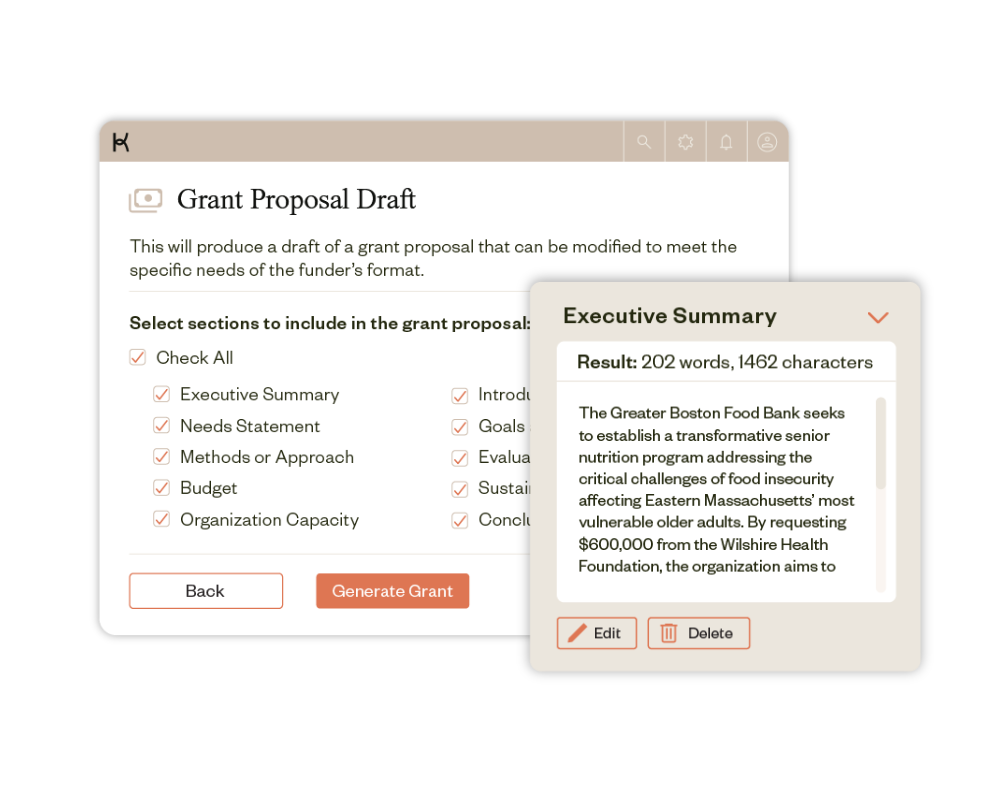
Post Kindsight launches AI-powered grant writing solution
CHARLOTTETOWN, PE & SAN FRANCISCO March 18, 2025 / – Kindsight, the industry-leading fundraising intelligence solution, has announced the launch...
-
Mastering grant management: Best practices for success

Post Mastering grant management: Best practices for success
Master grant management best practices to secure funding and enhance your nonprofit's impact. Discover essential strategies today!
-
How to write a winning grant proposal

Post How to write a winning grant proposal
Learn how to write a grant application that stands out. Follow our expert tips and step-by-step process to secure funding.