


Share Article:


Every nonprofit knows the excitement of seeing that first donation come in from a brand-new supporter. But to keep them invested in your mission, you’ll need to move beyond that initial excitement and show sustained recognition and appreciation over time.
In the article below, we’ll share exactly why donor recognition is so important, the four simple steps to building a strong donor recognition strategy, and donor recognition ideas that work for every giving tier and engagement level.
What is donor recognition?
Donor recognition is any act that nonprofits take to appreciate, reward, or recognize their donors and their generous contributions.
Donor recognition spans the first essential thank-you message following an initial contribution, to more exclusive forms of recognition, like donor appreciation events, donor walls, plaques, and more.
Often, nonprofits plan out their donor recognition strategies and timelines ahead of time. This helps them stay on top of donor communications and be more strategic about fostering deeper donor relationships.
Learn the art of the thank-you letter
We’ve got some best practices for expressing gratitude that enhance donor engagement and retention, and inspire future giving.

Why donor recognition matters
Donor recognition is essential for keeping new donors invested in your mission. It helps with donor retention, leads to higher donation amounts, and can help put you in contact with more potential supporters. It’s also a core component of any effective donor stewardship strategy— the act of building strong, lasting, and beneficial relationships with donors after their first gift.
Far from being a box-ticking exercise or a simple way of thanking donors, donor recognition brings real, tangible benefits, like turning one-time givers into recurring donors, or even encouraging legacy giving or major gifts. We’ll explore these benefits in more detail below.
Why donor recognition matters for nonprofits
- Inspires future giving: Donors who feel appreciated are much more likely to give again, become recurring givers, attend fundraising events, or volunteer for your cause.
- Expands your donor network: When donors feel engaged and appreciated, they’re more likely to share your organization with others, engage with social media posts, or boost your reach by participating in a peer-to-peer fundraising event.
- Strengthens your community: A strong mission-aligned community not only strengthens your organization financially but also helps you stay true to your wider mission and goals.
- Brings financial stability: Donor recognition is key to encouraging long-term giving, which helps you advance new programs and initiatives, budget for the future, and keep your nonprofit operating more sustainably.
- Establishes positive brand recognition: Nonprofit organizations with a strong reputation for recognizing their donors build up brand credibility, which strengthens their organization over time.
Why donor recognition matters for donors
Donor recognition isn’t just beneficial for nonprofits. For donors, it deepens their personal connection to a cause they care about, which can be highly rewarding.
Here are some of the key benefits of donor recognition for nonprofit supporters:
- Creates a value-aligned community: Donors who feel recognized and valued are more likely to feel part of something bigger than themselves. Plus, donor recognition events or volunteering opportunities help like-minded people build lasting relationships, friendships, and community.
- Brings opportunities for deeper involvement: Donor recognition can include invitations to events, membership or volunteer programs, or other learning opportunities. For donors invested in your cause, this can be an exciting opportunity to develop their skillset and make an even bigger impact.
- Builds a culture of gratitude: The ultimate goal of donor recognition is to make donors feel valued, appreciated, and seen for their efforts—these positive feelings can move beyond just your organization, creating a wider culture of appreciation and gratitude.
Donor recognition strategies: 4 steps to effective recognition
For many nonprofits, thanking donors after a first gift is automatic. Similarly, nonprofits that regularly practice strong donor recognition can bake it into their operations so it becomes second nature. The steps below will help you craft a strong donor recognition plan that’s easy to implement, builds strong donor relations, and keeps donors enthusiastic about giving to your cause.
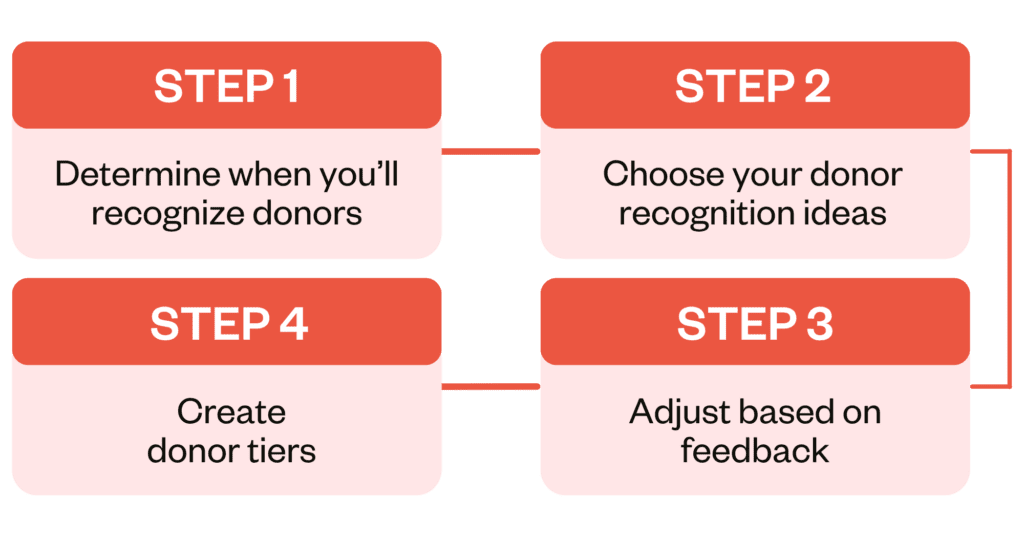
Step 1: Determine when you’ll recognize donors
First, you’ll need to decide when you’ll practice donor recognition. Pick two or three of the times below and schedule them into your calendar:
- Straight after receiving a donation: Share a thank-you text or email immediately after donors have given. This is the first, essential step in any effective donor recognition strategy, and this basic level of appreciation is expected by most donors.
- Once they’ve become recurring donors: Taking the step from one-time donor to recurring donor shows a higher level of commitment that’s worth celebrating.
- At events: Whether you’re hosting a specific donor recognition event or a broader fundraising event, designate time and resources to recognize your donors through in-person events.
- At the end of the year or quarters: Send an annual or quarterly report sharing impact, and acknowledging how your donors have helped you reach these milestones.
- On their donation anniversary: Keep track of when your donors first gave, and highlight significant milestones like 1, 5, and 10 years.
- During holidays: Holidays are a great opportunity to recognize your donors—send a thoughtful holiday card, or throw a holiday recognition event.
Step 2: Choose your donor recognition ideas
Once you’ve decided when to recognize your donors, you’ll need to decide how you’ll recognize them. The best donor recognition strategies usually include a few different forms of recognition to help increase engagement. You’ll need to find the types of recognition that will resonate most with your support base.
Digital e-cards
Digital e-cards are a simple and affordable way to show donors you value them. They show more thought and creativity than an email, but they’re easy, affordable, and get delivered right to your donor’s inbox.
Phone calls
Connect with your donors over a ten-minute phone call. Share the specifics of how their gift has helped your cause, and ask thoughtful questions to learn more about them. Just remember, recognition is about showing appreciation, not asking for additional donations.
Branded or mission-related gifts
Show appreciation for small donations with branded mission-related items. For example, if you’re an animal rights charity, this might be a stuffed toy. Other popular examples include branded tote bags, T-shirts, or pens. Be sure it’s a high-quality item your supporters will be excited to use.
Social media spotlights
Showcase groups of supporters with a series of social media highlights, or create a “Donor of the Month” recognition program, highlighting individual contributions and sharing your donors’ personal stories and motivations for giving. Just be sure to get their permission first, as not all donors are comfortable with this type of public recognition.
Beneficiary videos
Beneficiary videos can behugely impactful—while statistics can be impressive, these types of personal stories can really illustrate the difference donor contributions make in a way that resonates. Record a video montage, or share a special, personalized thank you from one of your beneficiaries.
Appreciation events and award ceremonies
Create special appreciation and recognition events centered on showing your donors just how much you appreciate them. Host a special lunch, or give them free branded merchandise to take home. To keep costs low, use a venue you already have access to, like a nonprofit building or a boardmember’s house.
Deepen engagement: Volunteer opportunities, donor groups, advocacy efforts, and attending events
Your donors are the people who care most about your work and mission. Recognize their commitment by opening up invitations to special volunteer opportunities, advocacy efforts, or events related to your organization. They’ll likely appreciate the opportunity to deepen engagement with your cause.
Plaques or donor walls
Create special plaques for your high-ticket donors to honor significant contributions, like funding a new program or building development. You could also create a donor wall in a clearly visible space within your organization and add to it over time to showcase your supporters. Plaques or donor walls are a great option for recognizing your most influential donors or legacy donors.
Private tour or educational event
Offer a special private tour of your facilities to groups of donors, or ask an expert on your mission to give a presentation tailored towards your supporters’ interests.
Step 3: Create donor tiers
Best donor recognition practices can vary depending on how much – or how often – donors are giving to your organization. Segment your donors into tiers based on donation type and engagement frequency, including:
- First-time donors
- Recurring donors
- Major donors
- Volunteers
- In-kind donations
Once you’ve determined your donor segments, you can create more personalized donor communication tailored to each tier.
Remember, just like donor recognition, donor segmentation is also key to any effective donor stewardship plan. Keeping all your donor data and segments centralized in a fundraising CRM platform can help you keep a donor list that’s consistent across your entire fundraising strategy, and save you from confusion or duplicating work down the line.
Step 4: Adjust based on feedback
Not every type of donor recognition works for every donor. For example, some donors may prefer more private recognition, like thank-you cards, private tours, or phone calls, over more public recognition, like social media spotlights or award ceremonies.
Don’t be afraid to ask for feedback from your support base directly. Send a short survey asking which types of recognition they prefer, and how they feel about your current strategy. Measure retention and donor engagement levels to get a sense of how your strategy is working. If you’re not seeing results to match your goals, try a new donor recognition idea.
Donor recognition best practices
While every donor base is different, these strategies will complement and enhance any donor appreciation strategy or idea.
Follow these donor recognition practices to get the most from your donor recognition program, and ensure you’re not missing out on any opportunities to show extra appreciation.
- Acknowledge gifts immediately: Always send a thank-you note via email as soon as you receive a donation. Timely recognition is essential to any donor recognition strategy.
- Keep receipts separate: Donor recognition and gift receipts should be kept separate. While they’re both necessary, if you send a thank-you note alongside a receipt, it risks getting missed or feeling less impactful.
- Create donor recognition levels: Once you’ve chosen the donor recognition ideas that work for your nonprofit, group them based on donor type. For example, your first-time donors might get an e-card and branded merchandise, recurring donors might get a beneficiary video or social media spotlight, and major donors a private tour or plaque.
- Use a mix of approaches: Use a range of channels and methods to show recognition—like social media, in-person events, or more personal one-on-one communication.
- Personalize recognition: Always include a supporter’s name, gift size, and acknowledge any other involvement each individual donor has contributed to your mission. Overly generic recognition often doesn’t strike the same chord.
- Share specific impact: Don’t just say a generalized thank you—share exactly how each contribution helps advance your mission. For example, share that an individual donors $100 contribution provided food and shelter for one animal in need.
- Acknowledge all gifts, regardless of size: No gift is too small to be properly recognized. While you likely shouldn’t award a donor plaque for a $20 contribution, be sure to offer thoughtful, creative recognition for every single gift.
- Keep track of donor data and timeline: Keep an organized donor database and donor recognition calendar. This makes it easier to stay on top of communications, so recognition doesn’t get repetitive and supporters don’t get missed.
Just like fundraising events, capital campaigns, or prospecting major gifts, an organized, strategic donor recognition practice is a key component of a financially healthy nonprofit.
Start by segmenting your donors by giving amount and engagement level, map out your donor recognition timeline, and choose a handful of recognition and appreciation ideas. Remember, you can—and should—adapt your strategy as you go. This way, you’ll build a cadence that shows donors just how much they’re valued, and take your organization from strength to strength.
FAQs about donor recognition
What does donor recognition mean?
Donor recognition refers to any step nonprofits take to show how much they appreciate and value their donors. Examples include special donor appreciation events, e-cards, donor walls and plaques, or social media shoutouts and spotlights.
What are the 5 stages of donor development?
The 5 stages of donor development refer to the process of intentionally building donor relationships, from identifying a potential donor to stewarding them to build a lasting relationship.
These are the 5 stages of donor development:
- Identification: Conducting research to find potential new donors who care about your mission.
- Qualification: Learning if your donor prospect has the capacity to give.
- Cultivation: Building a relationship with your prospect through communication and engagement.
- Solicitation: Securing a donation.
- Stewardship: Continuing to build and strengthen the relationship until it’s time to make another ask.
What is the donor recognition strategy?
A donor recognition strategy is a systematic approach that nonprofits take to show recognition and appreciation to their support base. This strategy involves sharing prompt appreciation after every gift, organizing appreciation ideas based on giving levels and engagement, and personalizing donor contributions based on your donors’ interests and giving amounts.

Be the first to read our resources.
The world is changing quickly—and our resources help you stay on top of it all. Sign up to get new insights, success stories, and more, sent right to your inbox.
Explore related resources.
- How to create an effective nonprofit social media strategy

Post How to create an effective nonprofit social media strategy
Learn the 8 steps to a better nonprofit social media strategy. Reach more donors, recruit volunteers, and grow your community in 2026.
- A guide to donation receipts

Post A guide to donation receipts
Learn donation receipt requirements for cash and non-cash gifts, best practices for stewardship, and how to remain IRS-compliant while building donor trust.
- Donor cultivation vs. stewardship

Post Donor cultivation vs. stewardship
Explore the differences between donor cultivation and stewardship, and how these strategies foster sustainable, long-term fundraising success.